What Is the Normal Anion Gap Range in Grown Adults?
An Anion Gap Calculator can help you understand a common blood panel by revealing whether your result is within the expected normal range for anion gap. The anion gap is a helpful clue about electrolyte levels and the body’s acid-base state, especially when a clinician is evaluating hidden causes of illness. It is not a diagnosis by itself, but it is a valuable diagnostic indicator when interpreted with the rest of the chemical panel.
For adults, the normal value depends on the lab, the method used, and whether the result is reported with or without potassium. That is why a reference tool can be helpful, but the final answer always depends on the lab’s normal range and the full clinical picture.
What the anion gap is measured
The anion gap is a computed number that indicates the gap between the main positively charged and negatively charged electrolytes in the blood. In simple terms, it calculates the amount of unmeasured anions that are not directly listed on a standard serum chemistry panel or electrolyte panel.
A most common values used in the anion gap formula are sodium, chloride, and bicarbonate. A few formulas also include potassium. Because these are measured ions on a standard blood test, the calculation gives clinicians a quick view of the body’s electrolyte balance and potential acid-related problems.
Why should it be considered? When acids rise or certain substances rise in the blood, the anion gap can change. That makes it a valuable screening test for conditions that affect acid-base status. It is especially useful when evaluating a metabolic disorder or signs of acid accumulation.
Think of it as a gap between what is measured and what is expected. If that gap is wider or smaller than normal, it may point to a shift in chemistry that needs attention.
Standard anion gap range in adults
The typical normal range for an adult anion gap is often around 8 to 12 mEq/L when potassium is not included, though many laboratories use varying numbers. Some lab reports may show a wider reference range, such as about 3 to 11 or 4 to 16 mEq/L, depending on the method and analyzer.
For adults, there is not one fixed number. Instead, the correct interpretation comes from the lab’s own reference interval and the way the result is reported. A value that looks “high” on one report may be within the expected laboratory values on another.
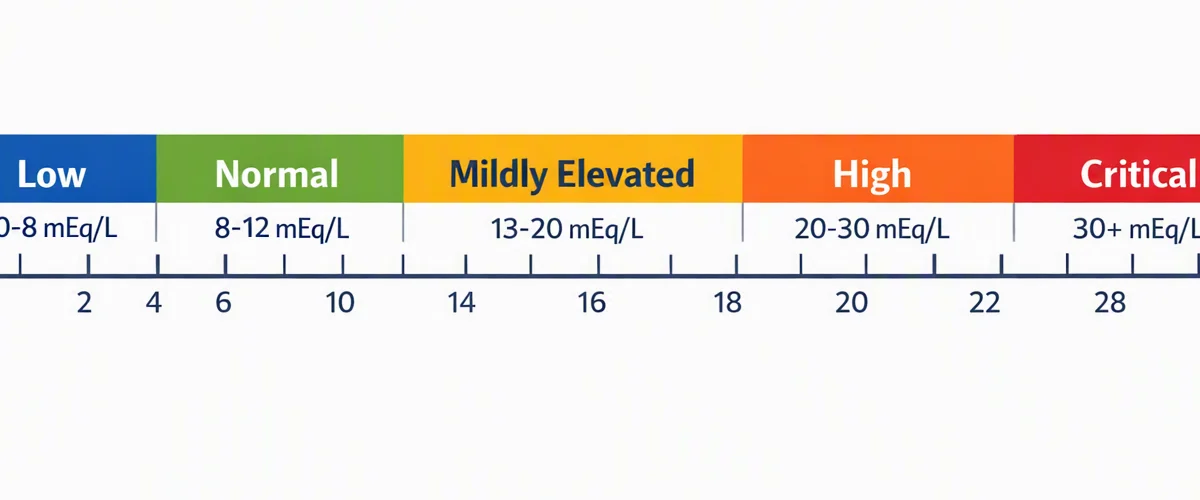
Because of that, the best approach is to compare the result to the range printed on the report from the specific blood test. A result should be viewed in relation rather than in isolation. The same applies whether the test was part of a serum chemistry panel, a complete blood chemistry workup, or an electrolyte panel.
In practice, clinicians care less about a strict reference number and more about whether the result aligns with the patient’s symptoms, the rest of the labs, and the suspected diagnosis.
Why the range can vary by lab and method
The reported reference range can change because different labs use different instruments, different testing method settings, and different calibration standards. Small technical differences can move the final result enough to affect the printed reference interval.
Another major factor is albumin. Albumin is a negatively charged protein in the blood, and it influences the anion gap. If albumin is low, the gap can appear lower than expected even if the body has another problem. This is one reason an albumin-corrected anion gap can be useful for better clinical interpretation.
Because albumin is one of the main unmeasured anions, a low level may mask a significant acid problem. This is especially important in people with chronic illness, poor nutrition, inflammation, or fluid shifts. In those cases, the lab’s standard range may not tell the full story.
Different analyzers also handle sodium, chloride, and bicarbonate slightly differently. That means the same person could receive a slightly different anion gap from another laboratory. This is normal and usually reflects the lab-specific range, not a mistake.
When a clinician sees an unexpected result, they often check whether the range should be adjusted for albumin and whether the test was performed using a method that tends to run higher or lower than others.
How to work out the anion gap
The usual anion gap formula is simple:
Anion gap = sodium - (chloride + bicarbonate)
Certain versions include potassium:
Anion gap = sodium + potassium - (chloride + bicarbonate)
The Anion Gap Calculator performs this calculation instantly. You input the lab values from the blood test, and the tool returns the calculated gap. This can be especially useful when reviewing a serum chemistry panel or an electrolyte panel and trying to understand whether the number is typical, reduced, or above normal.
Below is a simple example without potassium:
- Sodium: 140
- Chloride: 104
- Bicarbonate: 24
The result is 140 - (104 + 24) = 12. That result would often fall within a typical adult reference range, depending on the lab.
Why choose a calculator instead of doing it by hand? A calculator reduces errors, makes review faster, and helps when comparing several lab sets over time. It also supports more precise clinical interpretation when the numbers are borderline or when there is concern for an abnormal result.
Some practitioners also consider the serum bicarbonate level separately, because it helps explain whether the body may be dealing with acid loss, acid gain, or compensation. The anion gap does not replace the full acid-base workup; it adds to it.
How a reduced, typical, or raised anion gap may indicate
A result within the normal range is often comforting, but it does not rule out illness. A normal value can still occur in a person with a real problem, including normal anion gap metabolic acidosis. On the other hand, a high result may point to an acidic disorder that needs prompt review.
Decreased anion gap
A low anion gap is rarer than a high one. One frequent reason is hypoalbuminemia, where albumin is reduced and the gap appears lower than expected. Other causes may include lab variation, certain medications, or uncommon changes in blood proteins. Because albumin strongly affects the calculation, clinicians often think about the albumin-corrected anion gap when the number is unexpectedly low.
Normal anion gap
A normal value generally means the measured electrolytes fit the lab’s expected reference interval. However, a normal result does not always mean everything is fine. Some forms of acidosis, especially normal anion gap metabolic acidosis, can occur when bicarbonate is lost but chloride rises to balance it. In those cases, the total gap may remain normal even though there is a true acid-base problem.
High anion gap
A high anion gap suggests extra acid or unmeasured substances in the blood. Common causes include metabolic acidosis, lactic acidosis, and problems related to kidney disease or kidney failure. When the kidneys cannot clear acids well, the gap may rise. Lactate buildup can also increase the gap during conditions such as poor oxygen delivery, severe infection, or other stress states.
In these situations, the anion gap is a useful clue, but it does not tell the whole story. A clinician may also review renal function, oxygen status, medications, and other labs to find the cause of the acid load.
Because the anion gap can change for several reasons, it should be seen as part of a broader pattern. A single abnormal number may suggest a problem, but the actual diagnosis depends on the rest of the evaluation.
When to seek a medical review
You should ask a doctor to interpret the result if the anion gap is outside the normal range, if you have worrisome symptoms, or if other values on the blood test are abnormal. Important symptoms include mental anion gap in chronic kidney disease confusion, rapid breathing, extreme weakness, vomiting, dehydration, or signs of serious illness.
Medical review is most important if the result suggests an electrolyte imbalance or possible metabolic acidosis. A high value may need immediate review, while a low value may require review of albumin, medications, and repeat testing. The meaning of the number changes depending on the rest of the overall picture.
A doctor may also look for patterns across the serum chemistry panel, such as low bicarbonate, abnormal chloride, or changes that point to kidney disease. If there is concern for kidney failure, liver disease, or another metabolic issue, the result may lead to additional testing.
It is also wise to seek interpretation when the result is unexpected but you feel well. Sometimes the finding is harmless or due to normal laboratory variation. Other times it is an early clue that something needs attention before symptoms become obvious.
Key takeaway: an anion gap result should be interpreted as part of the full blood chemistry, not as a stand-alone diagnosis.
Often asked questions
What is the normal anion gap range in adults?
The usual anion gap range in adults is generally about 8 to 12 mEq/L when potassium is not included, but the exact reference range varies by the lab. Certain reports use slightly broader or smaller laboratory values, so the lab’s printed reference interval is the best guide.
What is regarded as a high anion gap?
A high anion gap is a finding over the lab’s reference range. In numerous settings, values greater than about 12 to 16 mEq/L may be considered abnormal, but the exact cutoff depends on the testing method and whether potassium is included. A high result can suggest acidosis, lactic acidosis, or another cause of acid accumulation.
Why does albumin affect the anion gap?
Albumin serves as a key unmeasured anion in the blood. If albumin levels are low, the calculated anion gap may look reduced than expected even if there is an underlying acid-base disorder. That is why clinicians may use interpretation of low anion gap an albumin-corrected anion gap for better clinical interpretation.
Can the anion gap be normal and still indicate illness?
Indeed. A normal anion gap does not eliminate illness. For instance, standard anion gap metabolic acidosis can happen when bicarbonate is lost and chloride goes up to compensate. The result may still be normal even though there is a real metabolic disorder.
How is the anion gap calculated from lab results?
Typically, the anion gap formula is sodium less the combined chloride and bicarbonate. Some formulas also include potassium. An Anion Gap Calculator can perform this calculation from the serum chemistry report or electrolyte test panel and help compare the result with the lab-specific range.